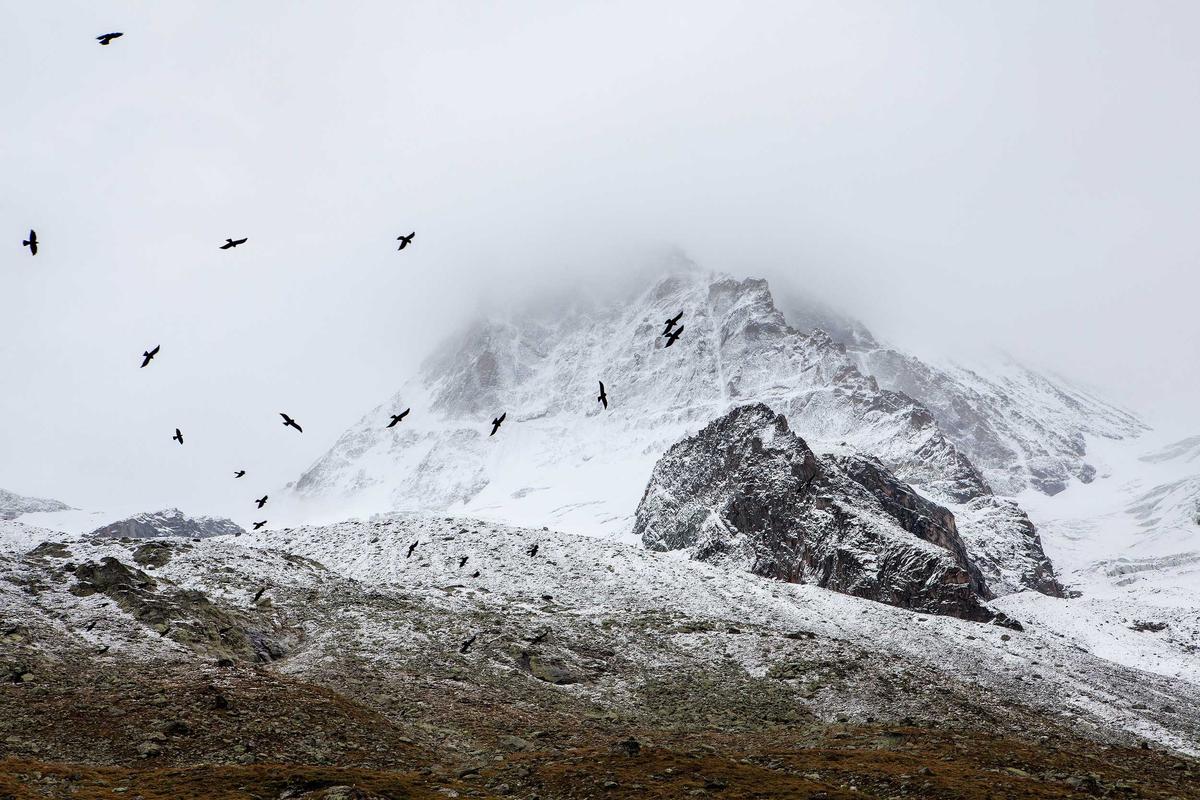
The disappearance of three British climbers on Mount Everest, following the miraculous survival of their guide, is now being treated as a potential security incident by Whitehall officials. The climbers, last seen at Camp 3 on the mountain’s hazardous south-west face, failed to return in the wake of a sudden storm. Their guide, a Nepali Sherpa with over a decade of high-altitude experience, was found alive at an advanced base camp, suffering from severe frostbite but giving conflicting accounts of what transpired.
NATO intelligence sources have flagged inconsistencies in the guide's timeline, suggesting he could have been compromised or coerced by hostile state actors operating in the region. The Ministry of Defence has categorised this incident as a ‘threat vector’ in the ongoing assessment of Chinese military expansion into the Himalayas. The guide, who remains in a controlled debriefing at a Kathmandu hospital, has refused to confirm whether the climbers were intercepted by foreign agents or simply lost to the elements.
A former SAS operative embedded in the search team noted that the storm’s timings align perfectly with electronic warfare exercises conducted by PLA signals units in Tibet last month. This is not a climbing accident; this is a strategic pivot in a theatre where every crevice is a potential insertion point. The families of the missing have been briefed by the Foreign Office, but the official line remains “weather-related delay”.
Meanwhile, the alpine industry is in a state of panic: Himalayan logistics are built on trust, and this event threatens to unravel the entire expedition framework. Interpol has been alerted, and a satellite reconnaissance tasking order has been filed via the UK Space Command. If the three climbers do not surface within 48 hours, this will shift from a rescue operation to a recovery mission with geopolitical ramifications.
For now, the search is hindered by the lack of secure communications above Camp 2, a vulnerability that has been repeatedly highlighted by defence think tanks. Every missing climber is a data point; every survivor a vector. We are watching this develop through a lens of hardened steel.