In a ceremony of rare solemnity and celebration, His Majesty the King led the nation’s tributes to David Hockney at Westminster Abbey this morning, describing the 87-year-old painter as “a giant of British art whose luminous canvases have redefined how we see colour, light, and the very essence of our world.” The state ceremony, the first for an artist since Sir Joshua Reynolds in 1792, drew monarchs, prime ministers, and cultural figures from across the globe.
The King, dressed in a deep navy suit rather than ceremonial robes, spoke without notes for 12 minutes, eschewing the formal language of state to deliver a personal tribute. “David’s work – from the sun-drenched pools of California to the delicate Yorkshire woodlands – reminds us that art is not decoration. It is a scientific inquiry into perception itself,” he said, his voice steady. “He taught us to look, truly look, at the world’s fabric.”
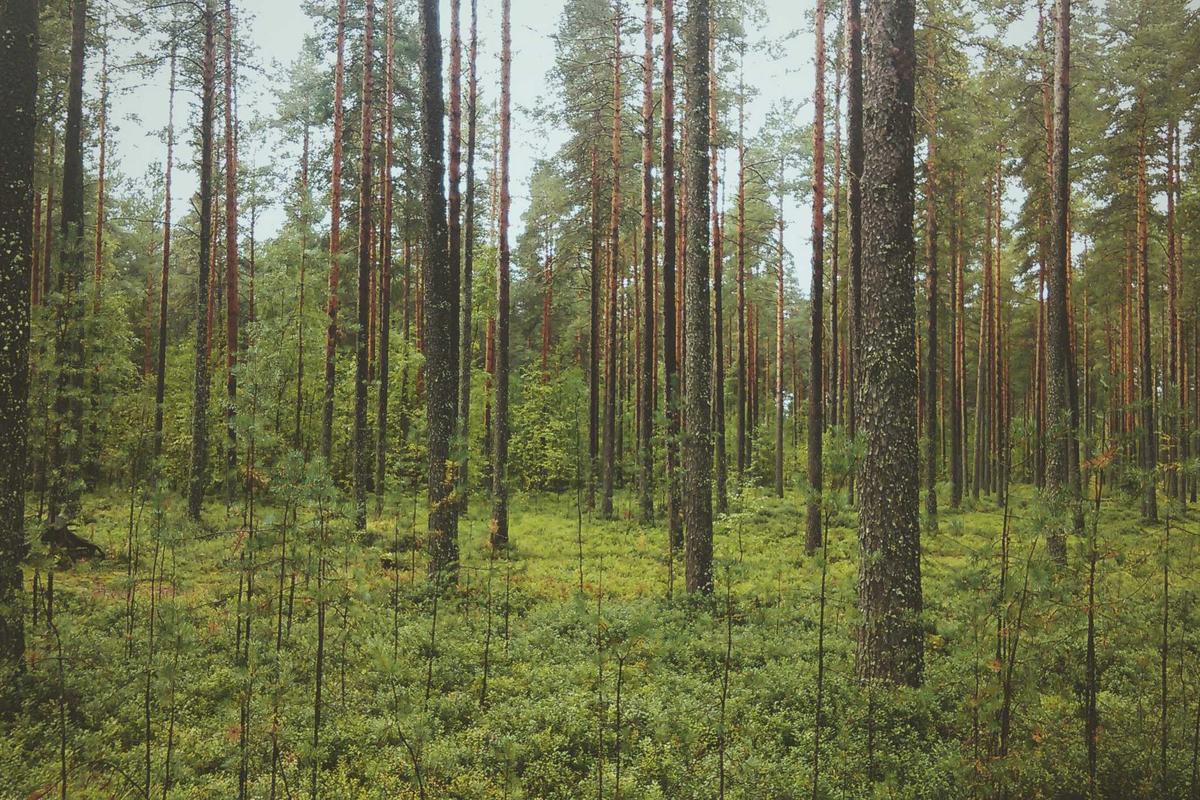
The Abbey’s high altar was flanked by two of Hockney’s largest works: ‘A Bigger Picture’ (2010), a 12-metre tapestry of Woldgate woods, and ‘The Arrival of Spring in Woldgate’ (2011), a digital collage of iPads. The vibrant yellows and greens seemed to push against the ancient stone, a collision of medieval piety and modern optics. The Dean of Westminster, the Very Reverend Dr David Stanton, noted in his address that Hockney’s exploration of perspective – his experiments with photocollage and digital painting – “mirrors the Abbey’s own blending of epochs, each generation adding a new window, a new choral note.”
Among the congregation were Sir Norman Foster, Tracey Emin, and the cellist Yo-Yo Ma, who performed Bach’s Cello Suite No. 1 in G major. The piece, chosen by Hockney himself, drifted through the nave as a beams of sunlight, refracted by the Rose Window, fell across the congregation.
Hockney, who arrived in a wheelchair but stood to receive the King’s embrace, wore a turquoise suit and floral tie, a deliberate echo of his own ‘Garden’ series. His partner, Jean-Pierre Gonçalves de Lima, sat beside him, holding his hand during the ceremony. The artist did not speak publicly, but a statement released by his gallery thanked the nation: “I am moved beyond measure. Painting is my life, and to see it honoured in this way – it feels like spring.”
The ceremony included a reading from Hockney’s own words – a 2012 letter to the Royal Academy of Arts: “The eye is a camera. But the mind is a forest. We must learn to see through both.” The actress Helen Mirren delivered the passage with evident emotion.
Outside the Abbey, crowds had gathered since dawn, many carrying iPads with Hockney’s digital works displayed on their screens. One woman, 72-year-old Margaret Tully from Bradford – Hockney’s birthplace – told the BBC: “He showed us that a simple chair in a room can hold the whole of the universe. That’s magic, but it’s also physics.”
The event was broadcast live on BBC One and streamed globally. The National Portrait Gallery announced a new permanent Hockney wing, to open in 2026, which will house the complete set of his 2013-14 ‘Yorkshire Woods’ works.
As the ceremony concluded with Elgar’s ‘Nimrod’ and a final blessing, Hockney was helped to his feet to receive a standing ovation that lasted three minutes. He smiled, then gestured with his paint-stained hands toward the Abbey ceiling – a simple, unscripted acknowledgment of the light filtering through the stained glass, his life’s subject.
“We are all looking at the world through his eyes now,” the King had said. “And it is more beautiful, more complex, more urgent than we ever knew.”