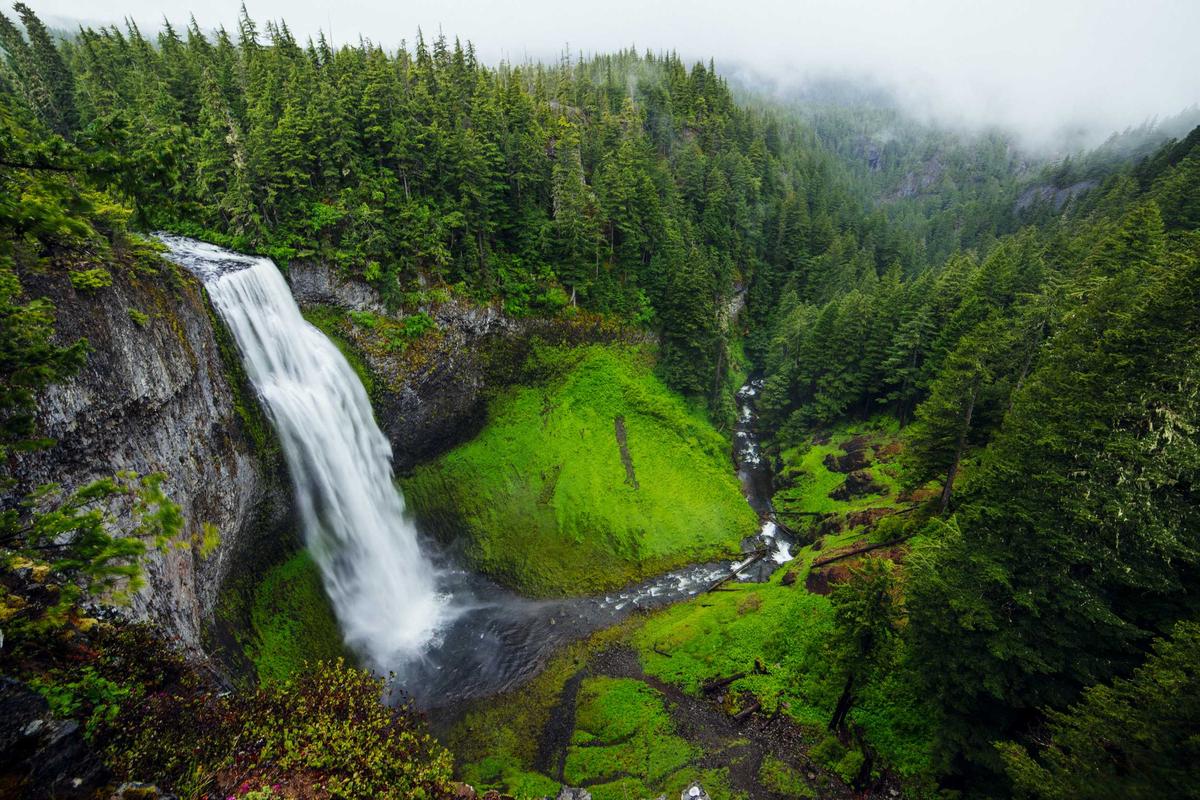
The thundering cascade of Niagara Falls, long a symbol of natural grandeur, is now being groomed as a premier destination for football fans during the upcoming World Cup. British tourism officials, in a novel cross-border collaboration, are eyeing the region as a strategic hub to attract visitors who might otherwise bypass the area for more traditional urban centres.
Data from the US National Park Service indicates that the falls attract approximately 14 million visitors annually, but the World Cup presents an opportunity to channel a portion of the predicted influx of 5 million international fans to the spectacle. The idea, floated in a joint memorandum between VisitBritain and the New York State Department of Tourism, proposes leveraging the falls' iconic status to host large-scale viewing parties, fan zones, and cultural exchanges.
From a climatological perspective, the choice is not without irony. The falls themselves are a monument to the planet's hydrological cycles, yet the event they are to host is fuelled by a carbon-intensive industry. However, the physical reality of the world is that energy transitions take time. The falls' hydroelectric capacity 2.4 gigawatts from the Niagara Power Project is a reminder of the region's potential for renewable energy, though the majority of its power still comes from natural gas.
The British angle is particularly fascinating. UK tourism chiefs see this as a chance to strengthen ties with the US and Canada, especially as post-Brexit trade deals stagnate. The proposal includes joint branding, with Union Jack motifs alongside Maple Leaf and Stars and Stripes, projected onto the falls each evening during the tournament. The optics are compelling: a spectacle of light and sound against a backdrop of 3,160 tonnes of water per second.
Yet the practicalities require a sober assessment. Infrastructure along the Niagara Gorge is already strained during peak season. Adding thousands of football fans, many of whom will be consuming alcohol and generating waste, could exacerbate environmental pressures on the ecosystem. The New York State Department of Environmental Conservation has flagged concerns about litter and noise pollution, but has not opposed the plan outright, citing the economic benefits.
The British tourism delegation, led by VisitBritain's CEO Patricia Yates, has been meeting with local stakeholders this week. In a statement, Yates highlighted the 'natural affinity' between British football culture and the dramatic landscapes of North America. She noted that the falls were already a backdrop for the 2012 Olympic torch relay and the 2017 eclipse viewing event.
Critics, however, point to the carbon footprint of long-haul flights required to bring fans to the falls. Yet in a world grappling with biosphere collapse, the tournament's organisers are betting that exceptional experiences will override environmental concerns. The 'calm urgency' of energy transitions must coexist with the realities of global sport.
As the World Cup approaches, the sight of millions gathered at the brink of the falls, cheering for their teams, will serve as a microcosm of our time: a celebration of human achievement against a backdrop of profound natural change. The question remains whether such events will be a net positive for the planet's climate trajectory, or merely a last hurrah before the cascades slow to a trickle.