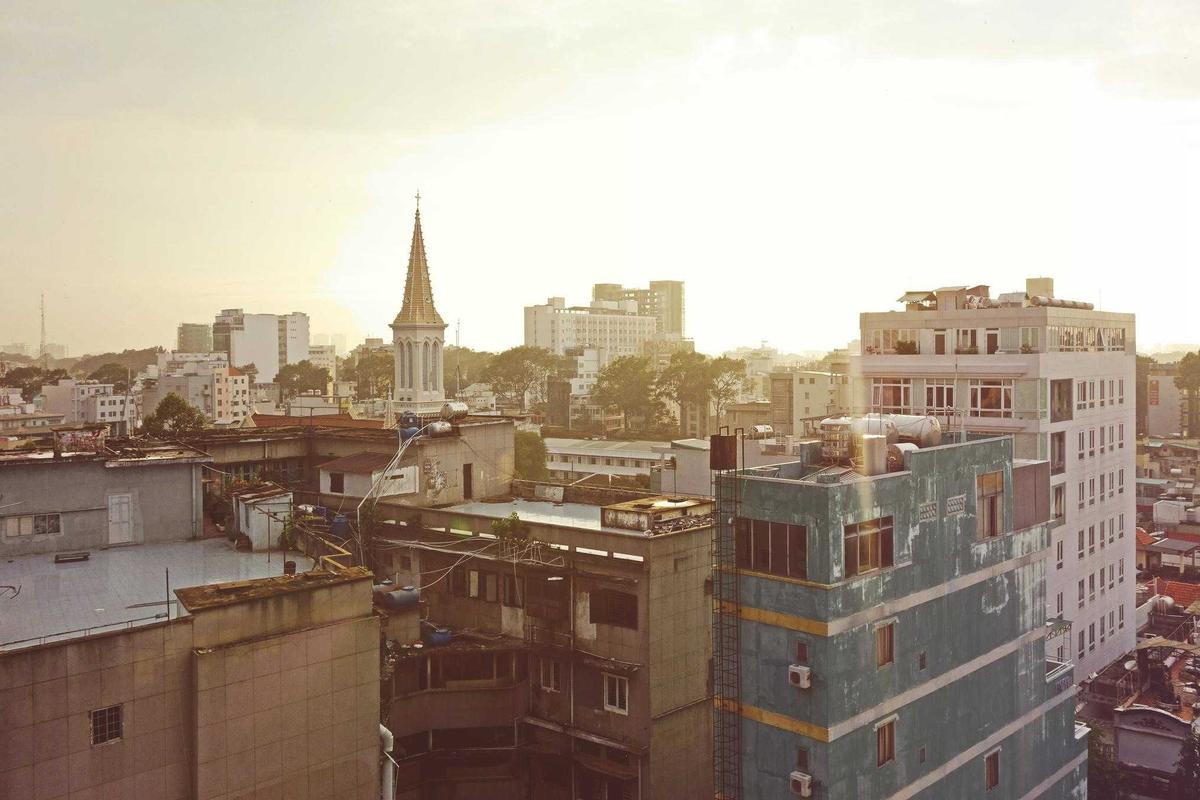
The Pontiff’s arrival in Barcelona this evening was met with a paradoxical display: a sky painted by fireworks above the Sagrada Família, and a ground swarming with heightened security. The juxtaposition was a vivid metaphor for the tensions that now grip this Catalonian city. Reports of a credible threat, though unspecified in nature, have prompted an unprecedented lockdown of the basilica’s perimeter. The atmosphere, as I witnessed from a nearby rooftop, was one of calm urgency. The faithful, undeterred, gathered in clusters, their faces lit by the intermittent glow of pyrotechnics and the cold blue of police beacons.
This event, set against the backdrop of a warming planet, carries a particular weight. The Sagrada Família, a UNESCO World Heritage site, has already seen its stone facades suffer from increased acid rain and thermal stress. The irony is not lost on the climate scientists who track such degradation. The fireworks, a traditional part of such celebrations, release particulate matter and carbon dioxide, accelerating the very decay we seek to preserve. It is a microcosm of a global dilemma: how do we honour our cultural heritage while acknowledging our planet’s finite capacity?
Security concerns have plagued visits of high-profile figures in recent years, but the overlay of climate anxiety adds a new dimension. The Spanish police, equipped with heat-sensing drones, are not only scanning for human threats but also monitoring weather patterns. A sudden heatwave, now a frequent occurrence in Mediterranean summers, could turn the gathering into a medical emergency. The Pope, a vocal advocate for environmental action, may find himself preaching to a choir that is literally feeling the heat.
The fireworks display itself, timed to coincide with the papal motorcade, was a masterful logistical achievement. But as the chemical trails dissipated, they left behind a distinct smell of sulphur and ammonia. It is a scent I have come to associate with our era: the lingering odour of combustion, whether from fossil fuels or celebratory explosives. The crowd cheered, but I could not help but wonder if we are dancing on a precipice.
Barcelona’s mayor, speaking earlier today, emphasised that the security measures were a necessary response to an evolving threat landscape. But what of the evolving climate landscape? The city has implemented ambitious green policies, yet events like this underscore the gap between aspiration and reality. The police checkpoints, staffed by officers in heavy gear, are a reminder that our resources are finite. Every euro spent on security is a euro not spent on climate adaptation.
As I file this report, the Pope is preparing for a private audience with Catalan separatist leaders, a move that carries its own political risk. Meanwhile, the Sagrada Família’s spires, unfinished for over a century, remain a symbol of perseverance. The ongoing construction uses over a thousand tonnes of steel each year, steel whose production is responsible for significant carbon emissions. We are building monuments to faith with the materials of industry, all while the Earth’s systems you know and love begin to falter.
The fireworks have ceased. The police remain. The heat lingers. Tonight, Barcelona is a city on edge, not only from the spectre of violence but from the creeping reality of a changing climate. The Pope’s message of hope will be heard; but whether it will be heeded is another matter.