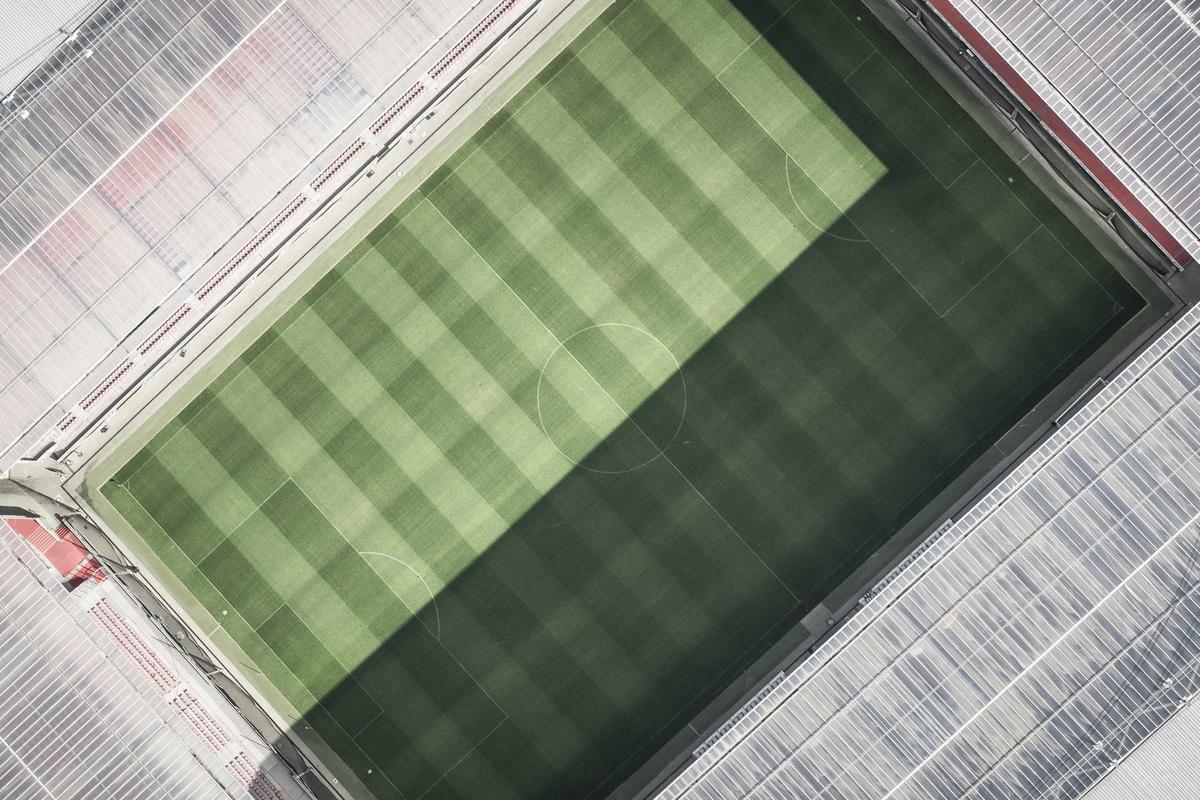
The cameras pan over the glittering stands of the Lusail Stadium. The world’s leaders are arrayed in their corporate boxes, each a testament to soft power and diplomatic theatre. Yet one seat remains conspicuously vacant. The American president is not there. And British commentators, ever eager to dissect the fall of empires, are asking a question that cuts deeper than mere protocol: what does the absence of a man who claims to lead the free world say about the state of our civilisation?
Let us cast aside the petty partisanship of the moment. This is not about Donald Trump’s personal schedule or his infamous aversion to globalist pageantry. This is about a historical pattern as old as the Roman Empire: the moment when the centre no longer holds, and the emperor retreats from the arena. The World Cup is not merely a football tournament. It is a modern analogue of the Roman games, a stage where nations project their vigour and their values. To be absent is to signal, whether intended or not, that the project of American global leadership has become a matter of indifference.
Consider the parallels. In the late fourth century, the emperors of Rome increasingly withdrew from the frontier provinces, preferring the safety of Ravenna or Constantinople. The legions remained, but the symbol of unity was gone. Local governors, barbarian chieftains, and eventually the Church filled the void. Today, we see a similar fragmentation. The American president stays home, while European leaders jostle for photo opportunities with Middle Eastern potentates. The vacuum is real, and nature abhors a vacuum.
But the critics miss a deeper point. The absence is not purely a failure of personality. It is a symptom of an intellectual decadence that has gripped the Western elite. For decades, we have been taught that national identity is a relic, that borders are obsolete, that leadership is merely management. The World Cup, with its flags and anthems and tribal passions, is an embarrassment to this cosmopolitan creed. Trump’s absence, in a perverse way, is consistent with a worldview that sees such displays as vulgar. Yet the irony is that the people who mock him for not playing the globalist game are the same ones who despise the very thing the World Cup represents: the messy, emotional, irrational love of one’s own nation.
Of course, the British commentators are not innocent. They tut-tut over the empty chair while ignoring the fact that their own prime minister cycles through office at a pace that would make a Visigoth blush. They demand American leadership even as their own foreign policy wobbles between nostalgia and irrelevance. The United States may be in decline, but the British are in an elegant, well-mannered retreat from history.
What is to be done? Nothing, perhaps. The cycles of history are not easily broken. But we can at least name the disease. It is the belief that a nation can survive on trade agreements and cultural exports alone, without the willingness to engage physically and symbolically in the great contests of the age. The World Cup is a minor contest. But it is an indicator. When the American president stays home, while Xi Jinping shakes hands with the Emir, a message is sent that resonates far beyond the football pitch. It is a message of withdrawal, of fatigue, of a civilisation that has lost its nerve.
The British commentators may cluck their tongues, but they are not the answer. They are merely the chorus in the amphitheater, commenting on the decline even as they themselves are part of it. The question we should all ask is not why Trump is absent, but what will fill the space he has left empty. History suggests the answer is never pleasant.