The United States government has declassified four videos showing unidentified aerial phenomena, prompting British defence analysts to call for greater transparency. The footage, captured by naval aviators, depicts objects moving at hypersonic speeds with no visible means of propulsion. Julian Vane, Technology & Innovation Lead, analyses the implications for digital sovereignty and AI ethics.
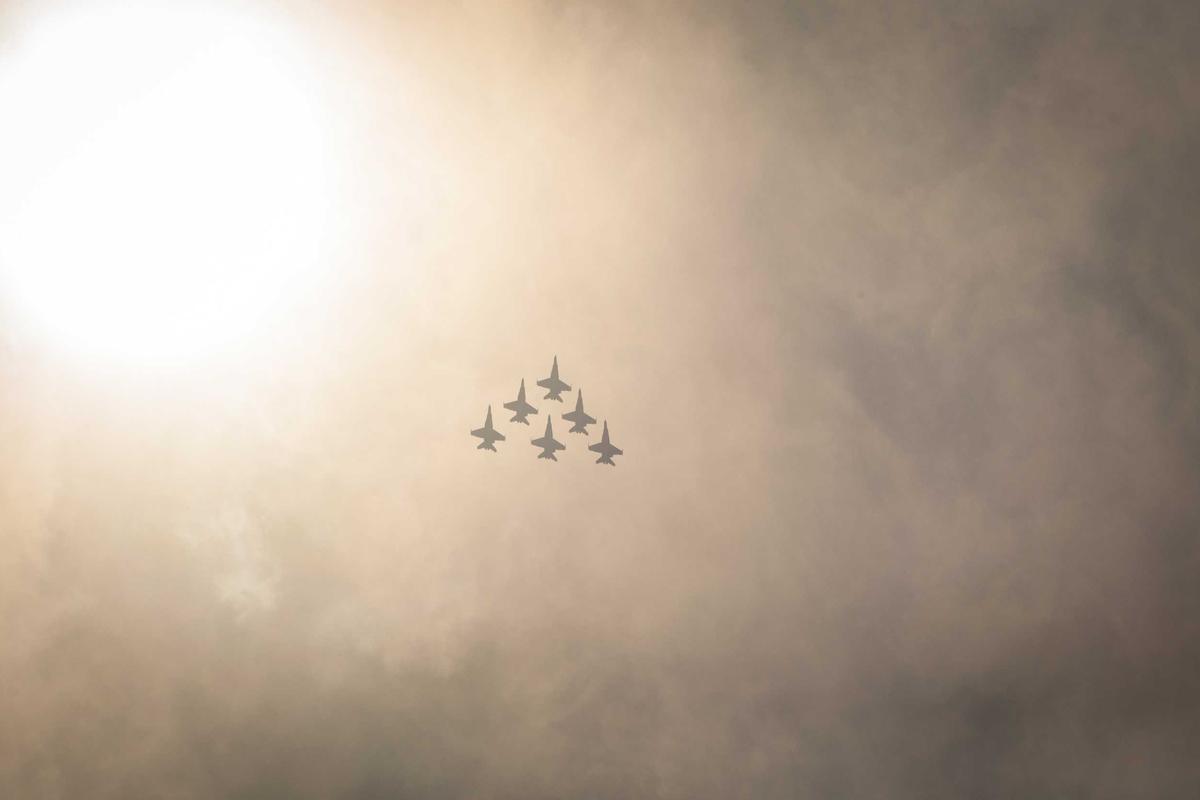
The videos, released by the Pentagon, show oblong objects accelerating rapidly, performing manoeuvres beyond human tolerance. One clip, taken from an F/A-18 Super Hornet, shows a craft rotating against the wind without any control surfaces. Another reveals a spherical object descending into the ocean at an angle that defies conventional physics.
“This is a watershed moment for transparency,” says Dr. Amelia Hartley, a defence analyst at the Royal United Services Institute. “We have military personnel risking their careers to share data, and the British government must reciprocate. The public deserves to know what our own sensors have captured.”
For Vane, the issue is not just about military secrecy. He highlights the broader societal disruption such technologies could cause. “Imagine a quantum-powered drone that can change shape or teleport. That’s not just a military advantage, it’s a paradigm shift in how we understand physics. If these are foreign or non-human craft, we need to discuss the ethics of reverse engineering them. The digital sovereignty of our airspace is at stake.”
The videos have been analysed by AI algorithms that detect no spoofing or CGI. “The metadata is clean,” confirms Vane. “These are real sensor readings. But even with proof, we face a trust deficit. The ‘Black Mirror’ scenario here is that we develop autonomous interceptors that can’t tell a bird from a UAP. The user experience of society suffers when we rush to deploy reactive AI.”
British defence analysts are calling for a joint task force, echoing the US All-domain Anomaly Resolution Office. “We need verifiable data sharing,” insists Hartley. “Not just videos, but radar logs, pilot testimonies, and sensor calibration files. Transparency builds public confidence, which is essential for any future regulation of these technologies.”
Vane agrees but warns of another risk: the weaponisation of narratives. “Every video becomes a propaganda tool. We must standardise verification methods using quantum-secure blocks, so no one can cherry-pick evidence. Otherwise, we lose the truth in a sea of conspiracy theories. That’s a UX failure for humanity.”
The declassification marks a shift from decades of denial. “We’re finally admitting we don’t know something,” says a former pilot who wishes to remain anonymous. “That’s humbling but necessary. The next step is to figure out if these are Chinese, Russian, or something else entirely. And if they’re not ours, we have to ask who’s playing chess in our backyard.”
Vane’s final thought is characteristically visionary yet grounded. “The videos are a mirror held up to our own technological adolescence. We are entering an era where the user interface of reality itself is being redesigned. The most ethical path is to share what we know, collectively, before we build a firewall of secrets that cuts us off from the future.”
The Crown has yet to comment, but behind closed doors, Whitehall is reportedly drafting a request for raw data. As the footage loops on news channels worldwide, one thing is clear: the mystery is only deepening.