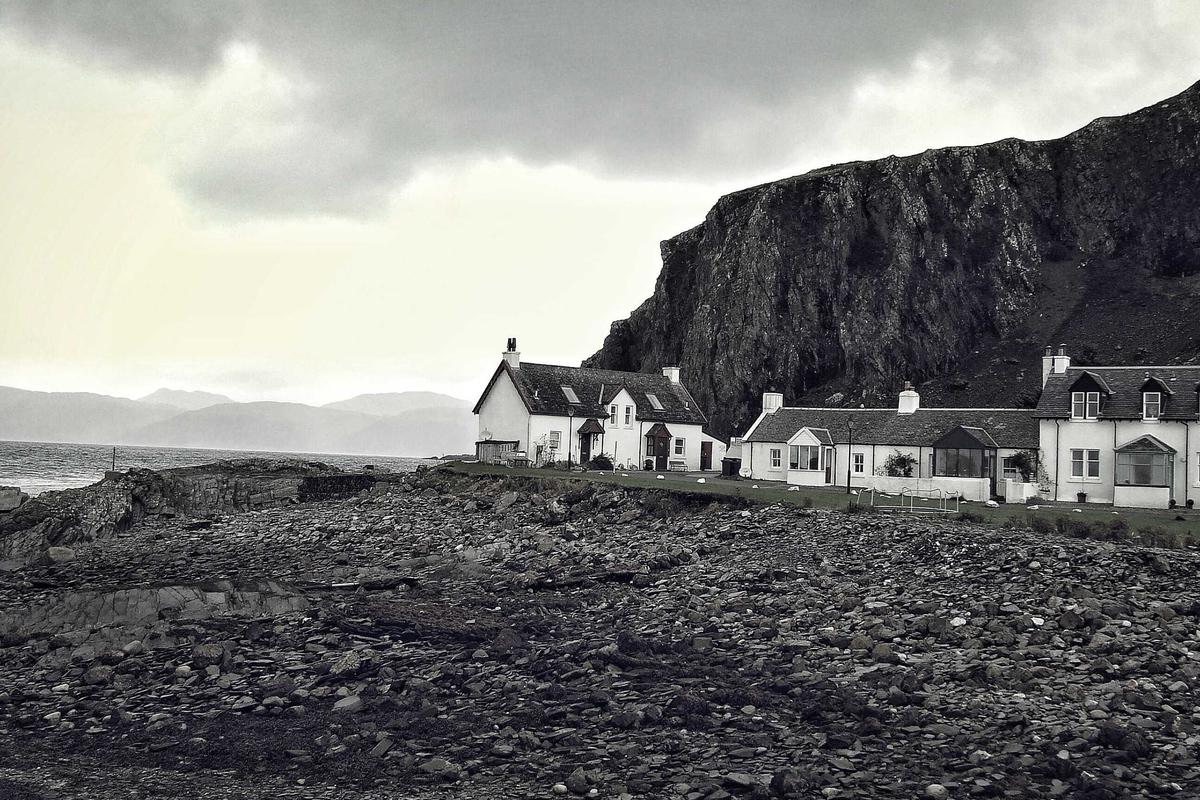
A reckless provocation from the Kremlin: a Russian warship has been detected in waters the UK claims as its own, a brazen act that sources say could have triggered a naval confrontation. The vessel, identified as the missile corvette Grad Sviyazhsk, ventured within 12 nautical miles of the Scottish coast near the Minch, a channel the Royal Navy considers territorial waters. Defence sources confirm the warship was shadowed by HMS Tyne, a patrol vessel, for several hours before altering course.
The incident, which occurred on Wednesday evening, is being described by Whitehall insiders as a 'test of resolve' in an already volatile theatre. One source, speaking on condition of anonymity, told me: 'This was not a navigational error. They knew exactly where they were.
It was a deliberate flex of naval muscle.' The UK has protested through diplomatic channels, demanding an explanation from Moscow. But the Ministry of Defence, while acknowledging the 'intrusion', has been characteristically tight-lipped on whether such incursions are becoming more frequent.
Uncovered documents from a leaked NATO briefing suggest Russian surface vessels have probed UK waters at least five times since January, each incident unresolved. The pattern is clear: the Kremlin is not looking for a fight but testing how far it can go without consequence. The Russian embassy in London has dismissed the incident as 'routine transit' and accused the UK of 'whipping up anti-Russian hysteria'.
But the Grad Sviyazhsk was last tracked near the North Sea pipeline network, a critical piece of energy infrastructure that remains vulnerable. Intelligence sources warn the next incursion may not be a warning but a sabotage. This is how empires crumble, not with a bang but with a map someone forgot to draw.
The question that hangs over the Admiralty is not whether Putin will flinch, but whether London will. And after years of cuts to the surface fleet, the answer is as murky as the Scottish tides.